
• Product Name: Citric Acid
  • Appearance: White Crystalline Powder, Colorless Crystals or Granules
  • Forms: Anhydrous & Monohydrate
  • Applications: Food Industry & Other Uses
  • CAS No.: 77-92-9
  • HS Code: 29181400
  • Molecular Formula: C6H8O7, C6H8O7•H2O

What Is Citric Acid

Citric acid (CA) is an important organic weak acid with the molecular formula C₆H₈O₇. It is a white crystalline powders, colorless crystals or granules in appearance, odorless, easily soluble in water, and the solution is acidic. And it is slightly deliquescent in humid air. In biochemistry, it is an intermediate in the citric acid cycle (tricarboxylic acid cycle), which occurs in the metabolism of all aerobic organisms. Therefore, citric acid is mainly used as acidulant, flavoring agent, preservative and antistaling agent in food and beverage industry. It is also used as antioxidant, plasticizer and detergent in chemical, cosmetics and cleaning industries.

The product can exist in anhydrous or monohydrate form. Generally speaking, citric acid anhydrous crystallizes from hot water, while citric acid monohydrate crystallizes from cold water. Citric acid monohydrate can be converted into anhydrous citric acid by removing bound water at 78 °C. Citric acid is also soluble in absolute ethanol at 15 °C and can react with ethanol to form ethyl citrate. Once the temperature exceeds 175 °C, citric acid also decomposes and releases carbon dioxide.

ItemUnitQuality StandardsAnalysis Results
Characters---White or almost white, crystalline powder,
colourless crystals or granules. Odorless,
has a strongly acid taste. effloresces in dry
air.
Very soluble in water, freely soluble in
ethanol.
Pass
Identification---Pass TestPass
Appearance of solution---Pass TestPass
Assay%99.5~ 100.599.8
Water%≤0.50.15
Readily Carbonisable Substances---Pass TestPass
SulphatedAsh (Residue on Ignition)%≤0.050.02
Sulfatemg/kg≤150<150
Oxalatemg/kg≤100<100
Leadmg/kg≤0.5<0.2
Arsenicmg/kg≤1.0<0. 1
Mercurymg/kg≤1.0<0.5
Aluminiummg/kg≤0.2<0.2
Heavy Metalsmg/kg≤5.0<5.0
Bacterial endotoxinsIU/mg<0.5<0.5
Conclusion:The product is in conformity with BP/USP/FCC/E330
ItemUnitQuality StandardsAnalysis Results
Characters---White or almost white, crystalline
powder, colourless crystals or
granules. Odorless, has a strongly
acid taste. effloresces in dry air.
Very soluble in water, freely soluble
in ethanol.
Pass
Identification---Pass TestPass
Appearance of solution---Pass TestPass
Assay%99.5~ 100.599.9
Water%7.5~ 8.88.69
Readily Carbonisable Substances---Pass TestPass
Sulphated Ash (Residue on Ignition)%≤0.050.02
Sulfatemg/kg≤150<150
Oxalatemg/kg≤100<100
Leadmg/kg≤0.5<0.05
Arsenicmg/kg≤1.0<0.3
Mercurymg/kg≤1.0<0.5
Aluminiummg/kg≤0.2<0.2
Heavy Metalsmg/kg≤5.0<5.0
Bacterial endotoxinsIU/mg≤0.5<0.5
Conclusion:The product is in conformity with BP/USP/FCC/E330

Application of Citric Acid Powder in food industry

The monohydrate form is widely used as an acidulant in refreshing beverages, fruit juices, jams, fruit candies, and canned foods, and also serves as an antioxidant in edible oils. It enhances flavor and overall sensory quality, stimulates appetite, and supports the digestion and absorption of minerals such as calcium and phosphorus in the human body. While the anhydrous form is extensively applied in solid and instant beverage formulations due to its excellent stability and solubility. Its salt derivatives, including calcium citrate and ferric citrate, are commonly used as nutritional fortifiers to supplement calcium and iron in functional and fortified foods. In addition, ester derivatives such as triethyl citrate function as non-toxic plasticizers for food packaging films, and are also used as acidifying agents and preservatives in the food and beverage industries.
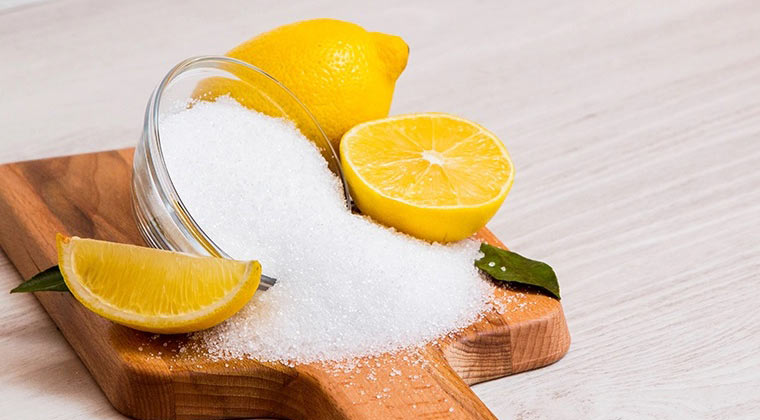

  • Food sour agent. As a natural organic acid, citric acid has a sour taste and refreshing taste. Therefore, it is widely used as a sour agent in food and beverages. It can not only increase the sourness of the product, but also improve the taste of the food.
  • Food antioxidants. During food processing, oxidation reaction is one of the main causes of food spoilage. As an antioxidant, citric acid can effectively inhibit oxidation reactions and extend the shelf life of food.
  • Food colorants. It has good complexing properties and can form stable complexes with metal ions such as iron, calcium, and copper. Therefore, citric acid is used as a complexing agent in some foods, which can combine with metal ions to form stable complexes and play a coloring role.
  • Flavoring. It has a sour taste and fresh taste, so it is used as an acidifier and flavor enhancer in some condiments. It can enhance the sourness of the product and improve the flavor quality of the product.

Other Industrial Uses

  • Cosmetics industry. In the cosmetics industry, this ingredient is commonly used as a pH regulator to help maintain the skin’s natural acid balance. It supports gentle exfoliation and skin renewal, contributing to improved texture and a more youthful appearance. In addition, its antibacterial and anti-inflammatory properties make it effective in helping to manage skin concerns such as acne, blemishes, and irritation.
  • Textile industry. In the textile industry, it is widely applied in bleaching and dyeing processes to assist in impurity removal and improve color brightness and uniformity. It enhances dye uptake and color vibrancy while supporting cleaner, more consistent fabric finishes. Additionally, it can be used as a fabric softening and antistatic agent, helping to improve hand feel, smoothness, and overall textile quality.
  • Metal cleaner. It can react with oxides on metal surfaces to remove dirt and rust. Therefore, it is often used as a metal cleaning agent, such as cleaning copper, iron, aluminum and other metal surfaces.
  • Rubber industry. The citric acid powder can be used as a rubber vulcanizing agent to improve the elasticity and durability of rubber. It can also be used as an additive in rubber processing to improve the processing performance and surface quality of rubber.
  • Electroplating process. In the electroplating process, the product is used as a buffer and complexing agent in the electroplating solution. It helps stabilize the pH value of the electroplating solution and improves the quality and efficiency of electroplating.
  • Leather tanning. This chemical can be used in the leather tanning process to increase the softness and durability of the leather. It also acts as a dye carrier to give leather the desired color and appearance.
  • Pharmaceutical industry. As a raw material for vitamin C, it is used to prepare ascorbic acid drugs. At the same time, this chemical can also be used as a drug carrier to help the drug be better absorbed by the body.
  • Agriculture and animal husbandry. Used as feed additives to improve animal production performance. At the same time, citric acid can also be used as a pesticide auxiliary to help pesticides perform better. In addition, the product can be used as a soil amendment and plant growth regulator.

Why Choose Fengbai 

  • A leading supplier in China, Fengbai group has more than 15+ years’ experience in exporting citric acid powder.
  • Stable supply & fast delivery.
  • Free samples for testing.
  • Various packaging to meet customers’ requirements.
  • ISO quality, good service and competitive factory prices.
  • Good cooperation with cargo agents and shipping companies.

contact