
Anatase titanium dioxide is a white inorganic pigment consisting primarily of titanium dioxide. It is one of the two major crystalline forms of TiO₂, the other being rutile. With its good whiteness, brightness, and optical properties, anatase TiO₂ is widely used in paper, coatings, plastics, rubber, printing inks, and chemical fiber production.
Compared with rutile titanium dioxide, the anatase form generally has a lower refractive index and weaker weather resistance but higher photocatalytic activity. Therefore, it is commonly selected for indoor products and industrial applications that do not require long-term outdoor durability.
Product Specifications for Anatase Titanium Oxide Grades
| Item | Anatase TiO2 (General Grade) |
|---|---|
| TiO2 Content, % | ≥98.0 |
| Color(Compared with the Standard Sample) | Approximate |
| Tint Reducing Power(Compared with the Standard Sample) | ≥100 |
| Volatile at 105℃, % | ≤0.46 |
| Water Soluble Objects, % | ≤0.5 |
| PH Value of Aqueous Suspension | 6.5-8.0 |
| Oil Absorption, g/100g | ≤26 |
| Dispersity, Um | ≤15 |
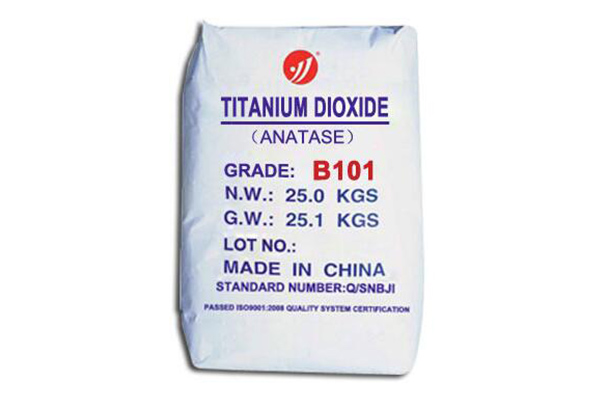
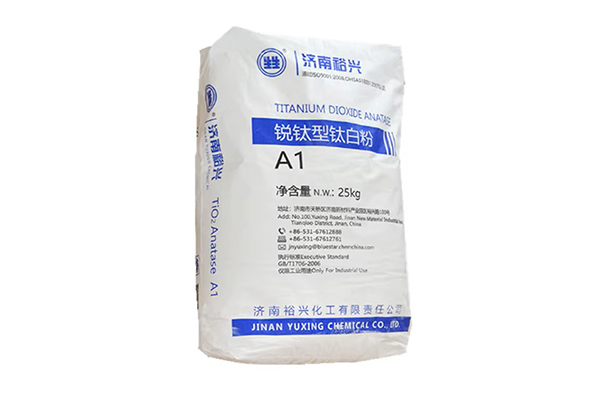
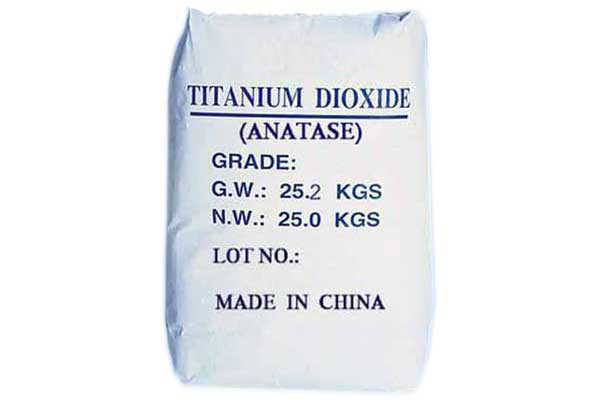
Primary Uses of Anatase TiO₂ Powder
1. Paper Industry. Anatase TiO₂ powder is used as a filler or coating pigment to improve paper whiteness, brightness, and opacity. Common applications include printing paper, writing paper, decorative base paper, and coated paper.
2. Paints and Coatings. This pigment is suitable for interior paints and general industrial coatings where high outdoor weather resistance is not required. It provides a white base color and improves hiding power in water-based coatings, decorative paints, and selected primers.
3. Plastics Industry. In plastic manufacturing, it provides white coloration and enhances product brightness and opacity. It is used in PVC, PE, and PP products, plastic masterbatches, films, sheets, and household plastic components.
4. Rubber Industry. The pigment provides white coloration and helps achieve a uniform appearance in rubber compounds. Typical applications include footwear materials, rubber seals, industrial components, and other light-colored rubber products.
5. Printing Ink Industry. In selected printing ink formulations, it provides whiteness and opacity for consistent color coverage. Common applications include water-based inks, paper printing inks, and packaging materials.
6. Chemical Fiber Industry. It serves as a delustering agent in chemical fiber production by scattering light and reducing excessive surface gloss. Typical applications include polyester staple fibers, filament yarns, and viscose fibers.
7. Ceramics and Other Industrial Applications. The material can be incorporated into selected ceramic, enamel, and inorganic formulations. Its photocatalytic properties also support specialized applications in environmental purification materials and functional coatings, although these uses generally require specially developed photocatalytic grades.
Anatase vs. Rutile Grade Titanium Dioxide
Anatase and rutile are the two main crystalline forms of titanium dioxide. Although they share the same chemical formula (TiO₂), differences in crystal structure result in distinct optical, physical, and chemical properties.
(1) Anatase Titanium Dioxide
The anatase form has a tetragonal crystal structure, a refractive index of approximately 2.49, and a theoretical density of around 3.9 g/cm³. It offers good whiteness and brightness but generally has lower hiding power and weather resistance than rutile. Its relatively high photocatalytic activity makes it suitable for paper, indoor coatings, and chemical fiber production.
(2) Rutile Titanium Dioxide
Rutile also has a tetragonal crystal structure, with a higher refractive index of approximately 2.7 and a theoretical density of around 4.2 g/cm³. It provides stronger light-scattering ability, higher hiding power, and generally better weather resistance. These properties make it widely used in outdoor coatings, plastics, and printing inks.
(3) Main Differences and Applications
The main distinction between the two forms lies in their optical performance and application requirements. Anatase TiO₂ is commonly selected for indoor and general industrial applications, while rutile grades are preferred when higher opacity, UV resistance, and long-term durability are required.
TiO₂ Content. The TiO₂ content is an important indicator of pigment purity. Higher content may be preferred for applications with strict composition requirements, but the overall product quality should also be evaluated through other performance indicators.
Whiteness and Brightness. Different industries have different color requirements. Paper, coatings, and plastic manufacturers should consider both whiteness and undertone to achieve the desired final appearance.
Dispersion Performance. Good dispersion helps prevent pigment agglomeration and improves color uniformity. This parameter is particularly important for plastic masterbatches, coatings, and printing inks.
Oil Absorption. Oil absorption affects the amount of binder or resin required in a formulation and can influence system viscosity and processing behavior. The appropriate level depends on the formulation and manufacturing method.
Particle Size and Distribution. Particle size and its distribution influence light scattering, opacity, and dispersion. A suitable particle size range should be selected based on the specific application rather than simply pursuing the smallest possible particles.
Surface Treatment. Some anatase TiO₂ grades receive surface treatments to improve wettability, dispersion, or compatibility with specific materials. Buyers should consider whether the product will be used in water-based systems, oil-based formulations, or plastic processing.
GET IN TOUCH WITH US NOW
WhatsApp/Wechat

Email Us
Address
ROOM 2628, 26/F, XITA COMMERCIAL BUILDING, INTERSECTION OF NORTH DONGFENG ROAD AND WEST FENGQING ROAD, JINSHUI DISTRICT, ZHENGZHOU CITY, HENAN PROVINCE, CHINA